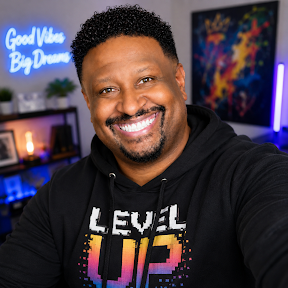
About
I’m a professor of graduate information technology at Purdue University Global, and I study how new technology reproduces old inequality. I’ve been at Purdue Global since November 2022.
Research
My work sits where AI, cybersecurity, environmental justice, and algorithmic discrimination overlap. It began with my dissertation (Ph.D., Information Technology, University of the Cumberlands, 2022; specialization in digital and network forensics), a quantitative study of facial-recognition acceptance in a smart policing initiative, built on the modified Technology Acceptance Model. Since then I’ve followed the question outward. Biometric systems and predictive policing. Where data centers get built, and who ends up paying in water, power, and heat. Hiring algorithms that filter out ethnic names. Federal cybersecurity cuts and the critical infrastructure low-income communities depend on.
Three contributions tie that work together:
- The Digital Colonialism Framework, which reads AI infrastructure as a continuation of historical patterns of resource extraction and racial segregation.
- The Intersectional Disparity Index (IDI) and Cumulative Disadvantage Score (CDS), quantitative measures of systemic inequity in AI-driven security systems.
- Community-based auditing frameworks that let grassroots organizations document discriminatory system behavior themselves.
Papers, chapters, and books are on the publications page.
Accountability, as I see it, runs past peer review to the communities most affected by the systems under study. So the tools are public. On GitHub you’ll find:
- michigan-ai-power-map, an interactive map of AI infrastructure, energy consumption, and environmental burden in Michigan
- usa-datacenter-energy-map, the same questions at national scale
- nist-frte-facial-recognition-bias, analysis tools for demographic disparities in facial recognition benchmarks
- say-my-name-llm-bias, an auditing framework for ethnic name filtering in language models and hiring systems, with a live dashboard
My book-length work includes 404: Justice Not Found: How Algorithms Encode Apartheid (Punny Girl Books, 2025); Once Upon a Quantum: The Blue Fairy Effect Meets the Geppetto-Pinocchio Paradigm (2025), which proposes two frameworks for how AI consciousness might emerge; and Living Under the Lens: Facial Recognition, Smart Cities, and the Theft of Black Freedom (Punny Girl Books, 2026). I also write fiction. Beauty for Ashes and No Ordinary First Lady, from the Tried in Fire series, carry the same questions about technology, identity, and community to readers who would never open a journal.
Teaching
Education is a right, and I teach as if that’s settled. Three commitments hold my courses together: access to knowledge for every student, whatever they walked in with; learning through real-world application; and a room where different perspectives get real space.
I came to teaching from systems management, network security, and IT consultation, so the projects I assign mirror what students will meet on the job. In my graduate cybersecurity courses, that means working through actual breach case studies, running forensic analysis, and building mitigation strategies. Tests alone don’t tell me whether someone can do the work. Scenario-based projects and regular feedback do.
Over the years I’ve taught networking and network management, information security, cloud operations, digital forensics, penetration testing, data analytics, programming foundations, and CompTIA A+ and Network+ preparation. The institutions are Purdue Global, Benedictine University, Western Governors University, the University of Michigan–Flint, Trine University, Cleary University, Salem University, and JobWorks. More on the teaching page.
Service
I served on the Flint Community Advisory Taskforce for Public Safety (2020–2022), contributing to training initiatives on systemic racism in public safety under the banner of Truth, Racial Healing, and Transformation. Since 2022 I’ve been an evaluator for the Broadcom MASTERS computer science and software engineering competition. In 2021 and 2022 I judged at the Regeneron International Science and Engineering Fair and the Flint Regional Science and Engineering Fair.
For the full career history, find me on LinkedIn. To reach me directly, use the email link in the sidebar.